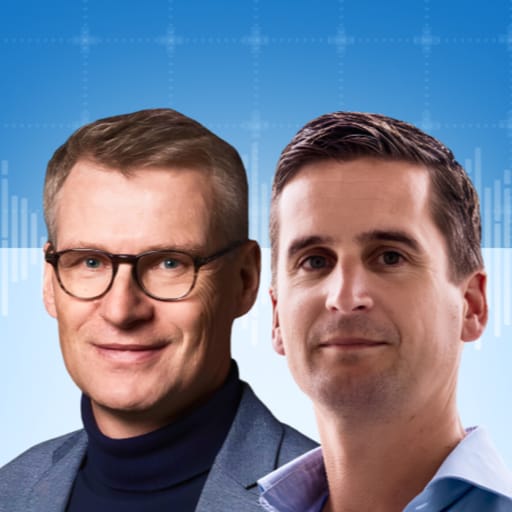
Transcript 0:00 [on-hold music] Welcome Mark and Harald to the IoT For All Podcast. Thanks for being here this week. Thanks for having us. Thank you. Absolutely. Yeah, it's great to have you. 0:11 Um, let's kick this off by having you do a quick introduction, maybe just about yourself. 0:14 Give a little background to kind of, you know, where you came from, uh, professionally, uh, what you do in your current role, what your company does, that kind of thing. Hello, everybody. My name is Harald, Harald Fuchs. 0:24 I'm the CEO of Freeway. Freeway is a IoT company based in Aus- in Austria. 0:30 We are providing connectivity services for the IoT space, and we moved with our software into the monetization part of IoT connectivity for businesses, and we will talk about this for specific industries. 0:44 My background is twenty-five years in telecommunications. 0:47 I used to work ten years in R&D with Nokia in the early times of mobile data connections, uh, and then spent the remainder time in Nokia, uh, as a sales representative. 0:59 I also worked for Ericsson and some startups in Silicon Valley, always in the start in, in the telecommunication fields. And, uh, in two thousand nineteen, I joined Freeway as the CEO. 1:12 Uh, I'm shareholder and one of the founders of the company, and, uh, yeah, I'm running now this company since this time. All right. Yes. So Mark van den Berg. 1:22 I do strategic business development for, uh, the IoT department at KPN, and we always say KPN is world-famous in the Netherlands. 1:29 We're a tier one MNO, uh, and well-known in the Netherlands for all our services we support, uh, from, from government to, to ministries to, to the big, uh, corporates. 1:39 Uh, and outside of the Netherlands, we do a lot of IoT, uh, that means Internet of Things, of course. 1:44 And, uh, in this IoT domain, I have specialized over the past years in eUICC global, uh, SIM technology, and I'm responsible for the automotive department within KPN IoT, uh, more on the commercial side, so on the, on the sales side, but also business development side. 2:02 And I help, uh, our big automotive customers to, uh, to grow their business and alongside grow our business. Maybe it'd be good to also just, um, understand the relationship between your two companies. 2:15 Just kinda how you work together, you know, what, what brought you together. Obviously, there was intent to have you both on this episode. 2:21 So just maybe talk to us a little bit about that to give, uh, you know, additional context there. The cooperation with KPN is lasting since the founding of, uh, Freeway. 2:31 We were sourcing their connectivity, uh, our incumbent partners, uh, when reselling connectivity to IoT businesses. 2:39 Uh, in the meanwhile, we have expanded to other partners, but KPN remains our largest, um, partner in the MNO space. Yeah, so and, and maybe, maybe to add to that, so we, uh, at KPN, we have a, a dual strategy. 2:53 We sell directly to, uh, to businesses, uh, small, large businesses, and we also have a, a very expansive partner strategy where we, of course, expand our business opportunities through working with partners that will support also smaller but also bigger opportunities. 3:09 So we just have a, a wider spread and more capabilities in the market. 3:13 So we, we have multiple partners in, for example, uh, the, the European region of which Freeway is one in specifically Austria, but also, uh, serving more and more countries. 3:23 And with regard to the industries that you focus, Mark, you already mentioned the automotive space. Through your relationship, do you all focus kind of jointly on a certain market and, and, uh, together? 3:35 Or are there, um... Are you kind of playing together in different markets as you bring, you know, opportu- or offers, um, offerings to those different sectors? It's an interesting question. 3:45 So Freeway as such is supporting m- multiple customer. Uh, Harald can explain everything about that. 3:50 But from a KPN perspective, beyond the, the, let's say, traditional partnership that we have, we've really, uh, had a strong focus on the automotive domain, where we as connectivity providers serve a lot of automotive companies today. 4:05 Uh, but of course, as every company, we want to grow in this, uh, respect. 4:10 And, uh, Harald with his company, uh, providing a specific tailored service to these automotive companies that, that fits really nicely into our, uh, our offering, which makes it a joint offering. Yeah. 4:21 Um, from one side, you know, Freeway is, uh, reselling the connectivity. That's our initial heritage where we come from. 4:30 And we were confronted by B2C customers, uh, so the consumer side of the IoT business, to create a solution that enables, uh, resellers to 4:42 add connectivity to their devices, but without going into the deep telecom stack and becoming telecom experts themselves. 4:51 So what we created is this monetization hub for them in order to sell connectivity, uh, together with their devices, products, and services, uh, as a combination. 5:02 Mark and, and KPN was aware of our doing in some consumer side of the business in the IoT, and they had a similar demand on the automotive side, and that's how the solution was brought into. 5:16 So I wanna expand on the automotive space a little bit 'cause that's always been kind of a, a topic of conversation on our podcast and just with people we speak to outside of it, and how IoT has been incorporated and has kinda basically grown and expanded over the n- many years. 5:29 So can you explain to someone maybe outside of the industry what you kind of do in IoT and connected cars and just any other potential use cases to kinda set the stage for the role IoT is playing in, in the automotive space from both of your lenses? 5:43 I can start there. Uh, maybe start with a little story out of my own, uh, hands. 5:49 So I, I recently, well, about half a year ago, was in the market for a new vehicle and, and in the old days, we would go specifically for brand, right? 5:57 Just as an example, if you like BMWYou will probably drive a BMW the rest of your life because it's a, it's a good brand, it's a, it's a good car. 6:05 But with the EV market, you see and we see, all of, all of us around see, that it's not so much about brands. It not s- it's not so much about the traditional way, is it really fast? 6:16 Is it, uh, what's the, the horsepower? Because all these electric vehicles have similar, uh, torque, similar, uh, horsepower. It's, it's not really relevant, acceleration. 6:26 It's more about what's the range, how fast does it charge, and, um, what is the infotainment like, yeah? So looking at my perspective. 6:36 So I was, I was looking for a car and then I thought, "Okay, if, if charge and, and, and, uh, uh, range and, and speeding of charge is, uh, is all good, then what does it look like?" 6:46 And then you, you go into these shops and you see small screens, big screens. And, and five, 10 years ago, when you had one screen in the car, you would say, "Oh, that's amazing." 6:55 And then we all know Tesla came out with, with the big screen in the middle, and a, and a lot of people said, just like with the iPad, right, "Why would you need that?" 7:04 And today, when you look into, let's say, a generic, uh, brand coming from China as an example, two scr- screens, three screens is very normal. And to power all these screens, you of course need a lot of software. 7:18 You need, uh, GPUs, you need ex- everything on that part. 7:22 But to be using them also when you're not in the range of your Wi-Fi, which is when you're using your car almost 100% of the time, uh, you need a cellular connection. 7:32 And that is really what we provide and what makes the car connected to IoT. So is it typical IoT use case? It's more a combination of consumer and IoT, and that's where also Harald kicks in nicely. Yeah. 7:45 What we see is simply when we talk to the OEMs that, uh, and, and the dealers in the respective market to say, "Okay, the data consumptions are steadily increasing," you know. 7:56 Um, many car brands selling their cars today, like you have connectivity for infotainment service included for one year, two years, sometimes three years. 8:06 They all make their cost calculations, uh, based on certain, uh, data throughput and data consumption assumptions there. 8:14 And then the user behavior is simply very much different because, as Mark said, the cars are simply more and more built for infotainment services with more screens and so on. 8:26 And when I'm talking to dealers here in Austria, for instance, they said that the car brands, when they found out that the data usage simply goes so much up, that they are throttling the, the, the, uh, throughput of the devices, or they're limiting the amount of data intentionally that can be consumed. 8:47 The reaction of the consumer is very different. They need more data. They need faster speeds in order to consume within the car. 8:54 Uh, we also talk to companies providing content for the cars, so they're rendering big movies on, into small screens. 9:02 Uh, they provide app stores for the cars, and, um, one vendor told us they had 10 apps in the app store, but only three are getting free accessible because the data usage for the OEM is going so much up. 9:16 And what is the reaction? So one side throttling and limiting the amount, other side is going to the MNOs, to their connectivity partners and smashing down the costs. I think that also has a, a certain limit. 9:30 Uh, or going to the content provider and say, "Give me a solution order for the high data volume we create that we can charge for that." 9:37 And that's exactly where FreeWheel kicks in so that we can control the telecom stack based on payments. 9:45 But, uh, our objective is, or we want to help the OEMs to monetize these data costs, uh, and then turn the costs into a revenue stream for them, and that's what the platform and what FreeWheel's doing, 9:58 supporting also KPN to sell their data services more. Maybe to give some context and some numbers there. 10:05 So we have a lot of history in providing services to connected vehicles, so some, uh, US brands, China brands, uh, EU brands. 10:13 And we see that, uh, seven, eight years ago, if you would be using 500 megabytes to one gigabyte in a vehicle, that was a, a, a, a lot of data. 10:23 Today, we see in Europe on average, um, maybe four or five gigabytes, uh, being consumed on a monthly basis. 10:31 Harald and I have been on a few trips to China, and what we see there, what we hear from the car manufacturers in China, that it's not strange that 30 to 50, so three zero, five zero gigabytes is used per month. 10:44 Uh, we don't understand how because it's the same video streaming. 10:47 It's, they probably live in their cars, but that's just, uh, with these amounts, it, it, it's, it's crazy to think that here in Europe they want to control and, and throttle and, and give you less while they see in their own markets that people just want more and, and, yeah. 11:03 Very much so. Um, and I'm curious, just generally speaking, what is that impact of, you know, this data explosion that you're seeing in all these different regions on OEMs right now? 11:13 Like what, what is, what is the biggest thing that they're seeing? 'Cause it does seem like each of the different brands has their own approach to it, but just, you know, how are you kinda seeing... 11:21 It seems like it's a positive thing if people are using, you know, and buying for the, the, the data, the infotainment, like all, you know, it's basically becoming, you know, a rolling entertainment center, right? 11:31 These cars with all the screens and capabilities now. So what are you seeing is the biggest impact on OEMs with all this? Yeah, that, that's interesting. So it, it's a bit of a conflict, huh? 11:40 Because they, they sell their vehicles including, uh, X amount of time free connectivity. 11:47 Um, but what we see, spec- specifically the China OEMs, we, uh, we, we look a little bit less at the European OEMs because, well, sorry about you, but you're lagging a little bit behind if you look at the infotainment screens and the opportunities. 12:00 But let's focus on the China market. We just see that they are providing services that create huge data demand, but then they forget actuallyTo find a way to monetize this. 12:11 So they will eventually, as Harald said, see it as a cost center. 12:14 So they, they sell the car and rather than getting a subscription, getting money in on a monthly basis, it's money out on a monthly basis because they're spending it to the operators. Of course, we don't mind. 12:26 We're happy to take, uh, to take those revenues, but the best situation, of course, is if they're also gaining some revenue from this rather than just having a cost. 12:37 So that's where, yeah, you have to turn around and, and, and take this opportunity. 12:42 That's our also the call to action to these OEMs, uh, work with us, work with others, but make sure that you monetize rather than just see it as a cost. Yeah. 12:52 Maybe just to add to what we see when we talk to the Chinese OEMs, that they are used in their home market to very low data prices and data or cost for sourcing the mobile data, which is in the overseas markets, so like in Europe, very different for them. 13:07 So, and of course these, uh, connectivity costs that we have in Europe are destroying their business cases. 13:15 So if they have maybe five hundred cars, thousand cars sold in a year, when they are entering the market, it's not a problem. 13:22 But when they are aiming to scaling up and you multiply all the subsidized that you're doing over time, uh, you end up easily in hundred thousands and maybe million, uh, euros of, of connectivity costs in a-- on a monthly basis. 13:37 And, uh, of course, pushing down the sourcing has certain limits, so you need to find different ways and, and finally, 13:47 more or less provides the value add that you give to the com-- uh, to the end user in the car using this infotainment content simply to monetize on that. Yeah. 13:56 One thing I was gonna ask you, just kinda maybe expand on a little bit, um, is around your IoT monetization hub and how that's helping OEMs turn connectivity from a cost center into a revenue stream. 14:06 'Cause it does seem like this is something that's gonna be very important as, you know, connectivity continues to ramp up, data usage continues to ramp up, and you just have to have more of those conversations to understand, you know, how this can be of value. 14:16 And to your point, Mark, how it's not just something that is looked, looked at as, um, uh, just another expense. And the monetization hub itself is by definition a platform that enables to sell mobile data. 14:27 So it has all the combination included. It's the, the building of the subscription of a, of a mobile data service that is attractive to an end user. 14:37 Uh, it takes care of different currencies because they're all selling on the, uh, not in one market, but in multiple markets. It takes, uh, care about the different value added tax regulations in every market. 14:50 It takes care about the KYC processes. When some markets in Europe you need to identify the end user identity, in others you don't. 15:00 Uh, in certain markets you do it, uh, electronically, in others you, you make it via support calls. So every market has different, uh, technologies behind that. Uh, so this is what we do. 15:13 Um, then of course, the payment collection. So we collect payments in different currencies in, in different markets. 15:19 You need acquirer certificate sometimes when you're coming from overseas and you have a very deep ownership structure, it's very hard to find the ultimate business owner and therefore making acquirer relationships with banks can take months or years. 15:36 That's what we have seen in the market. So this is what we give to the, to the OEMs, always in combination with the monetization hub. And then of course we integrate with the mobile operator side. 15:47 So when an-- when we receive a payment for a data service, we enable the data service on the backside, uh, for the infotainment. So that's then the intersection between KPN and mobile operators and the monetization hub. 16:03 So we are not providing the SIM card or whatever by itself, but we simply enable the service based on the payment status from the end user. 16:12 And of course, if something goes wrong, the OEMs need a support channel for that so that the end user can relate to and, and, and, uh, get his services solved. 16:23 And that's what we are al- also offering in combination with this. So it's a technology stack, it's an integration to a telecom, it's the payments, and it's also the support all in one platform. 16:33 Maybe another benefit, Harald, that you, uh, didn't mention now is that, uh, when, when looking specifically to China OEMs, uh, there's a lot less hesitance nowadays to buy a Chinese car. 16:46 So y- five years ago, hardly anyone would do that. Now people are more and more starting to buy these cars. Um, but that's a one-time sale. 16:55 You go to your local dealer, y- and then they will add this car to their, uh, to their brand list. 17:00 But then a subscription service where you have to buy, uh, an internet service in your vehicle, people still rather tend to buy that from European known brands rather than sending all your data to China and not knowing, uh, what people are doing with it, and also not knowing how, how the, the banking part is handled. 17:19 So a trusted European entity that you can subscribe to for your data package in your vehicle gives you a certain assurance and trust that you're working with a, with a EU, uh, regulated company. 17:33 It's a very important point that you add here. So we are GDPR compliant in the site. All the personal data are only hosted in Europe. 17:42 They are not transferred to any OEM, so they don't know, um, who actually subscribed for the service. Um, yeah, so that's, that's a very important... And, and we also take care on top on all the regulatory aspects. 17:56 So do you have the license to sell mobile data in the markets? Uh, can you resell it? Uh, do you need an MVNO license in certain markets? 18:05 So that's very different in all EU regions, uh, in the EU countries, and we take care of that. 18:12 So they more or less get a360 degrees feel well package Mark, let me ask you, so from, from the kinda MNO perspective, what does KPN bring to the partnership that OEMs really can't get on their own? 18:26 You know, what's, what's that kinda, what's the main role you play there? Yeah. So, so the good part is that, uh, uh, an MNO traditionally owns the network and, uh, the, uh, the, the data service. 18:39 Um, so that's r-radio and packet core, uh, or, or a core network. Um, what we provide is, it's very simple, it's a SIM like you put in your phone, uh, so they put that in the car. 18:51 But think of this use case, when you, when you buy your subscription at your local MNO, uh, you never think about when you go abroad that the service needs to be localized or needs to be, uh, similar to what you do. 19:04 You just go roaming, you connect to the network, and that's what happens. Uh, and if you don't have connectivity for a short period of time, you will wait until the next, uh, tower is available. 19:14 Uh, you, of course, you don't see that, but that's all happening in the back. 19:16 When you're in your car and you're navigating from Belgium into France or from the Netherlands into Belgium, you want your navigation system, you want all the streaming services to, to keep on working. 19:28 So we have s- we support these, these OEMs with technology on the SIM, on the device. It works closely together to, to hop to the next roaming partner very efficiently. 19:40 But what we also do is we make sure that even though you're using a KPN SIM in the whole of European Union, that we keep the data localized to the country that you originally buy the car. 19:53 And, and take a, take this use case, for example, when you're in the UK, you buy a Tesla, just as an example, you can buy any car, but buy a Tesla, and you want to listen to local UK content, watch your Netflix shows, watch BBC iPlayer, listen to B- you can't do that if you don't localize your, your SIM card. 20:12 So if you just use a KPN roaming SIM, that's not going to work. But then when you travel from the UK into the Netherlands, you don't want it to be switching over. 20:20 So a lot of localization, a lot of specialized products and, and, uh, parts specifically for the OEMs that will help them give the best customer journey. 20:29 Because in the, in the end, that means happy customer, they will buy the new car as well. 20:35 One of the things I wanted to ask you both about, 'cause it's been interesting to me, actually, just this past Saturday, I helped my mom and dad buy a new car. 20:41 Um, tons of different, you know, technology from the last car I bought. The infotainment system is completely changed. The subscription options for the technology have completely changed. 20:51 So if you think back to, like, when the phone came out and you would get an app, you know, you could maybe buy the app or the app's free, and that was kinda the end of it. 20:57 But then they started to add subscriptions onto certain apps or pay for things, in-app purchases, you know, that kinda stuff. 21:03 So I imagine that is eventually going to become something, if it's not already in some cars, um, happening inside the vehicle, which seems like a whole new frontier to kind of cha- to kind of talk about. 21:14 Um, what kind of services or user experiences could possibly, I guess, could come out of this that need to be solved for or thought about from your all's perspective? 21:22 When you do your initial payment and you're subscribing to our platform, what we do is we are tokenizing the, the payment, uh, information. 21:31 So it's, we don't know which credit card you are having and so on, but we can still continue in payment. So you can think of the car becoming your credit card. 21:40 So when the, when your, the OEM start integrating other services like parking toll, petrol consumption, or EV charging, uh, stations, road pricing, and so on, you can simply pay all of these services that you use alongside your, your vacation or alongside your trip, uh, and pay it within the car, uh, directly. 22:01 There is, um, for instance, Mercedes is going into this direction, not just to mention only Chinese brands, uh, who see the car as a credit card. 22:10 So you, you, you buy something in the shop, in the petrol station, and you pay from outside, from the car, um, by fingerprints and, and so on, so all these things. 22:21 So I think these services become possible as soon as you start collecting and controlling the payment information from the user within the car. 22:31 Of course, it requires integration and services to be added, uh, but you can build a whole ecosystem, whatever you do within the car. Yeah. 22:39 Maybe one other example that is, that is not there yet, at least I have not heard of it. For example, I charge my car using my, uh, solar panels on my roof. 22:48 Uh, it's a company car, so they pay for it, and I get some money back from the energy company. I'm not sure how that works, but, uh, sometimes I get some money and then okay, it'll be fine. 22:59 But what happens when the real, uh, vehicle to grid is implemented, right? So, and what I say with the real, today it's there, a few brands, Kia has it, there's a, there's a f- Hyundai has it, a few brands have it. 23:11 But what happens if you charge your car, uh, alongside the motorway, supercharge, and, and let your company pay for it, and then you use your car as your battery to support your house? 23:22 Is your company happy with paying for the extra charge you pay with a supercharger and then emptying your battery into your home? 23:29 Well, you need to have a powerful platform and connection, and using it as a credit card or using as a debit card, whatever. 23:37 But all these use cases that we haven't thought of yet that are there, uh, just for supporting the grid, uh, having batteries, but how are these payments going back and forth and, and, and how would this work? 23:51 You, you, you need to identify the car with yourself, and then you can start using it as a, as a mechanism. 23:58 And another example, Harald mentioned it today, I, when I go to France, I have this little toll, uh, uh, machine in my car, uh, that's an extra subscription. 24:07 I pay for this, so then it, it's deducted automatically from my account. Why is that not built into the car? It's easy. All these chips are there. 24:15 Uh, and if you then, as a car OEM, add a small margin on top of thisBut everything is integrated, like a, like a door opener for your garage, whatever. That's the unlimited possibilities. 24:29 Just add everything that you put as external item, put it in your software, software defined, and you can just, uh, use it instantly. 24:38 Do you think this requires a, I guess, a mindset shift from the OEMs when it comes to how big a role technology and data is playing in kind of becoming almost digital service providers? 24:51 Is that, is that something that they're already starting to kind of, you know, change their thoughts around? Or do you feel like it's g- it still has a ways to go for them to really shift their mindset into that, 25:02 uh, kinda area because of how big of a deal this is becoming? This really depends, and we could talk about this for hours. It's a very interesting topic. It, it really depends also on who is them. 25:11 So looking again at maybe... Let's take China and the US, right? T- Tesla and the US and the, the Chinese OEMs. 25:18 I think they are, their approach in the EV market is they start with the screens, and they build a car around it. 25:25 And that's a little bit different from the traditional brands here in Europe that actually build cars, uh, very nice cars, and then they say, "Oh, we need to add a screen. We need to add some software." 25:35 And of course, that is changing over time, so you see more and more that, uh, we were on the IAA show in Munich, uh, two weeks ago, and we saw also the European brands with big screens and lots of infotainment, uh, elements and, and menus to, to pick and choose from. 25:50 But the mindset is still a little bit different. It's still about the car, about the brand, more than about the software, about the infotainment. 25:57 It's also what you hear very often on the traditional brands, uh, uh, software is not too, too good. And when you talk about the newer brands, Tesla, everything, just swiping left to right, it all works. 26:08 So I think once this mindset is, is, uh, implemented by everyone, then automatically, uh, you will have vehicles speaking to each other, you, yeah, endless, uh, opportunities. 26:21 Maybe to add on that, I think for certain car brands, driving performance and the driving experience is more important than infotainment, and in other brands, it's the other way around. 26:34 Uh, so what we also see from some conversations is that, um, brands who are going more into the infotainment part see the car as the space they provide, uh, for consuming this content. 26:48 So it's like a, an equivalent that when you go into a cinema, you buy the ticket to watch the movie, but also to have a nice seat, to have your popcorns and your Coke and so on. 26:59 And inside there you want to be entertained. Um, and 27:05 some ideas, some early stage ideas, what we have seen from these brands saying, "Okay, yeah, the car is my space, it's my audience, it's built for that, and someone consumes, I want to have a revenue share." So 27:18 they see it completely different. So they see it as, that it's a service, it's a place, it's a room, uh, it's something that I built for you to consume something, and therefore I want to have part of the revenues. 27:31 And that's, for instance, discussions that we have on very deep revenue share structures. 27:37 So it's the content provider, it's the OEM, it's the guy making the content available for the small screens and so on, and they all want to have a share of revenues, the connectivity player as well. 27:49 So everyone, and, and the, so the ecosystem becomes very dynamic and very complex. 27:55 I like the example of the movies, uh, because I'm just having this thought of a few cars that we sat in when visiting, uh, on one of our China trips. Some of them are better than the movies, right? 28:06 You sit in the car, you... Just not the popcorn, but the audio, the video is just amazing experience. 28:11 If you take kinda what you're talking about there, and you go, you know, you fast-forward five, 10 years down the road, what does the connected car business model look like? 28:18 Like, you know, who's really focused on making the money, and how do you, how do they ensure that there's, you know, a fair revenue split amongst all parties involved? Yeah, that's interesting. 28:26 I think from a technology perspective and advancement, um, most likely we're not, we're not driving as often as we are today. 28:34 So, uh, self-driving capabilities will add even to the use of infotainment because now we're only doing that in the back or when we're charging. Uh, that will change. 28:43 I know it's still very unlikely, uh, that we all believe it and can comprehend, but, uh, yeah, we, we've seen a few brands doing it already. 28:51 Um, so that means it's becoming more and more important, so data consumption will go up. Uh, but of course, also price will come down, uh, of that data, so, uh, uh, th- those are all corresponding. 29:04 But I think we really will see that more and more screens, everything is about screens. 29:09 That we even s- s- seen cars now that seats in the front can just move all the way to the back, and not just when, when in parking mode, but also when driving. 29:18 So look at that, it's becoming more a space of meetings and, and, uh, e- everything that you can't think of today in a car. The self-driving part, what you mentioned, Mark, is very important. 29:30 I think when you are commuting a road self-driving, what are you doing? You either work because you know the road already, or you want to be entertained properly [laughs] in order to, to use the time. 29:43 Uh, I think this will simply just drive the content that is consumed within the car upwards and also the data consumption. I think that more and more companies will try to monetize on this. 29:57 So I think the challenge that we are facing as a software provider is to enable these deep value chains to giving them the part of revenue they deserve in the whole, uh, um, system, in the whole ecosystem. 30:11 So this is something that we are looking very much inside at the moment. 30:16 But also to integrate, as I said before, into other service providers that are quite close to the car, uh, like road pricing and so on, and parking and so on, um, to integrate in the platform to have a seamless experience.Um, so there's, I think the ecosystem should simply evolve over time stronger and stronger the more self-driving the cars become. 30:40 Last question I wanna ask you before we, before we wrap up here is just if we, if we think about where we are now and where we're going, what excites you both the most about not only this space, but, you know, you can kind of expand it out to IoT monetization in general. 30:54 Um, where is it heading? What, what are you most excited about? What should we be paying attention to, um, kind of just as we move forward here? 31:01 Automotive is of course one interesting sector for us, but we started in different areas, and we believe that, uh, with IoT and digitalization, many companies become or get way closer to the end user as they used to be. 31:16 They can have more data, they know better how the user is using the products. The way how companies are buying is changing also so that they're way more educated. 31:27 The buying patterns become more consumer-oriented, so when I have a customer today coming to me, he knows already the product, what he wants, and what's the price point he would accept. 31:39 So the sourcing becomes also more B2C. 31:41 So we believe that many IoT use cases, not only in the automotive, will become more consumer-focused, where subscription platforms and monetization platforms, uh, will play a very important role going forward. Um, 31:57 that's where we are putting more and more focus on in developing, uh, a system that can enable such a, a process to, to, to source like a B2C for even small and medium enterprises. Yeah. 32:11 May- maybe to add to that, what, what I am really waiting for is, I already mentioned it, but there's, there's a, I heard there's a piece of road in Scandinavia where, uh, they have allowed now for 30 kilometer strip of autonomous driving test drive, uh, setting, yeah, so live on the road. 32:27 Uh, they, they, they are doing this already, uh, on, on, uh, defined areas. But really once this is coming, and, and what I just said, right? 32:36 So if, if most cars can communicate to each other, can communicate to the streetlights, uh, there's a lot of, of, uh, business already going on in this space. 32:45 But if this becomes more mainstream, yeah, then, then there will be a whole new definition of a car, not even needing to, to put a steering wheel in. You can just put the seats wherever you want. 32:55 And, um, and, and of course we're way out, but we're also quite, getting quite close thanks to the technology giants that are building this and, and the, the data amounts that will be required, not per se for autonomous driving, because that's all locally handled. 33:11 But probably a lot of governments will say, "You need to send stream data back and forward to make sure that we can check and control." That will mean, uh, a- another shift. 33:20 So we'll need 7G modems to collect and send all this data, and yeah, that's a promising, uh, uh, era for, for us. Very exciting, just to kinda think about it all. 33:30 Um, you know, when you have the mix of vehicles who are semi-autonomous, autonomous, um, and have all the technology, and then you have a mix of, and then you have other cars who have, you know, older cars, very limited technology and they're driven by people. 33:42 You know, how does that mesh kind of out in the world? 33:45 But as more and more people and c- cars are available at certain price points and fit certain needs, I, I, I think just thinking about what that future means on how we view vehicles, like the purpose of them, the utility of them, it's, uh, there's so much more that can be done than just getting you from point A to point B. 34:01 So- That's a podcast on its own, right? Uh, and, and to your reference, uh, the, the, uh, uh, cars, uh, the, I've thought of that, right? 34:09 So cars that can communicate to each other and older cars, uh, and some people say, "Yeah, that's impossible to fix," but today you have good drivers and bad drivers, and we all mix in traffic, right? 34:19 So nothing different there. Everyone believes to be a good driver. 34:23 So last thing I'll have you do here is just, um, maybe, um, Harald and then Mark, just kind of give a quick, quick information out to our audience on where they can learn more, where they can follow up with questions, dive into kind of more what the company's doing, stay in touch, that kind of thing. 34:35 Freeway, you can find us on LinkedIn. Uh, our homepage is www.freeway.com, uh, where we talk a lot about monetization, the B2C platforms that we are offering, or you simply reach out on my LinkedIn profile. 34:49 And don't forget Freeway with three E's. Three E's. Three E's. Yep. It all, every- everything on our end, we'll make sure has three E's, for sure. 34:55 [laughs] And for KPN, it's, uh, kpn.com, which is, uh, our main website, and there is an IoT department, but also I can be found on LinkedIn and, uh, uh, as I'm in the commercial team, as soon as you hit me a message, I will immediately reach out and, uh, take it from there. 35:12 All right. Well, appreciate both of your time. Great conversation about a topic we haven't covered in a while. Um, very exciting to think about the future too, kind of where, where this is all going. 35:19 So, um, we'll do our work on our end to get this out to our audience and, uh, hopefully we'll talk again soon. Thanks, Ryan. Thank you, Ryan. [outro music]